
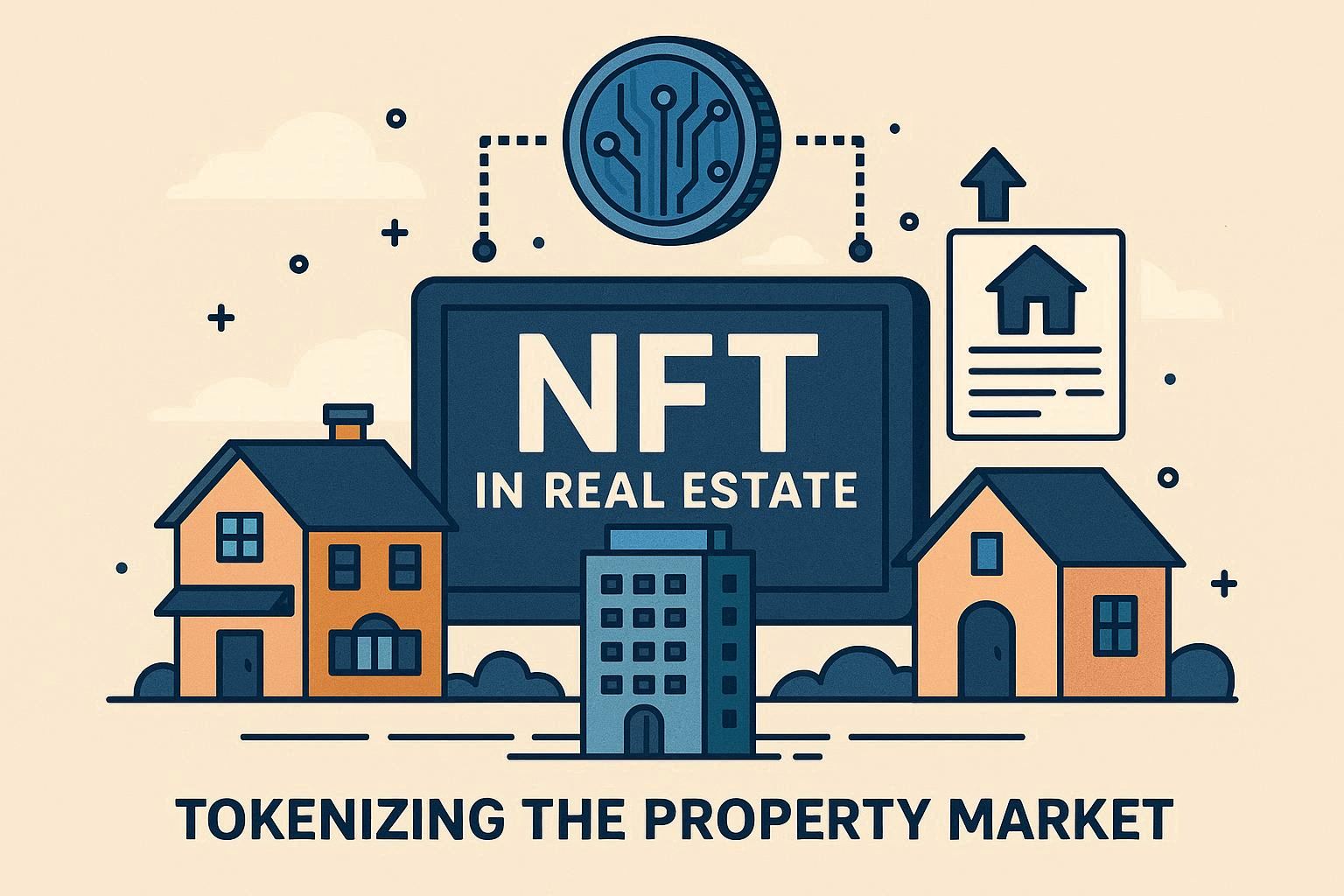
Real estate has long been one of the most valuable asset classes — yet it remains illiquid, slow-moving, and difficult for average investors to access. Blockchain technology and NFTs are changing that. By tokenizing property ownership, NFTs are transforming real estate into a digital, tradable, and transparent market.
This article explores how NFT-based real estate is redefining investment, property management, and global accessibility.
How Real Estate Tokenization Works
Tokenization converts property ownership into digital tokens recorded on a blockchain. Each token, often represented as an NFT, corresponds to a share of the underlying asset. This allows investors to buy, sell, or trade fractions of properties, similar to how stocks represent ownership in a company.
Key Benefits
- Accessibility: Investors can own fractions of high-value real estate without buying entire properties.
- Liquidity: Tokenized assets can be traded on secondary markets instantly.
- Transparency: Blockchain records ensure clear proof of ownership and transaction history.
- Efficiency: Smart contracts automate legal, financial, and escrow processes.
Use Cases
- Residential and Commercial Property: Investors own shares in apartment buildings or office spaces.
- Vacation Rentals: Platforms issue NFTs for partial ownership of luxury properties.
- Real Estate Crowdfunding: Tokenized projects allow micro-investments from global users.
- Land Registries: Governments can use blockchain to record land titles, reducing fraud.
Real-World Examples
Companies like Propy, RealT, and LABS Group are already implementing NFT-based property systems. Propy made headlines by selling the first-ever NFT-backed apartment in the U.S., demonstrating how blockchain can simplify real estate transactions.
Challenges
- Regulatory clarity remains a major hurdle for global adoption.
- Integration with traditional financial systems is still developing.
- Technical literacy among investors and property owners is low.
The Future of NFT Real Estate
As regulations mature and blockchain infrastructure improves, NFT real estate could become a mainstream investment option. Future innovations may include fully automated mortgage systems, decentralized real estate funds, and metaverse-linked property portfolios.
Conclusion
NFTs are bridging the gap between the physical and digital property markets. By enabling fractional ownership and instant transactions, they are democratizing real estate investment and reshaping global property markets for the next generation of investors.