
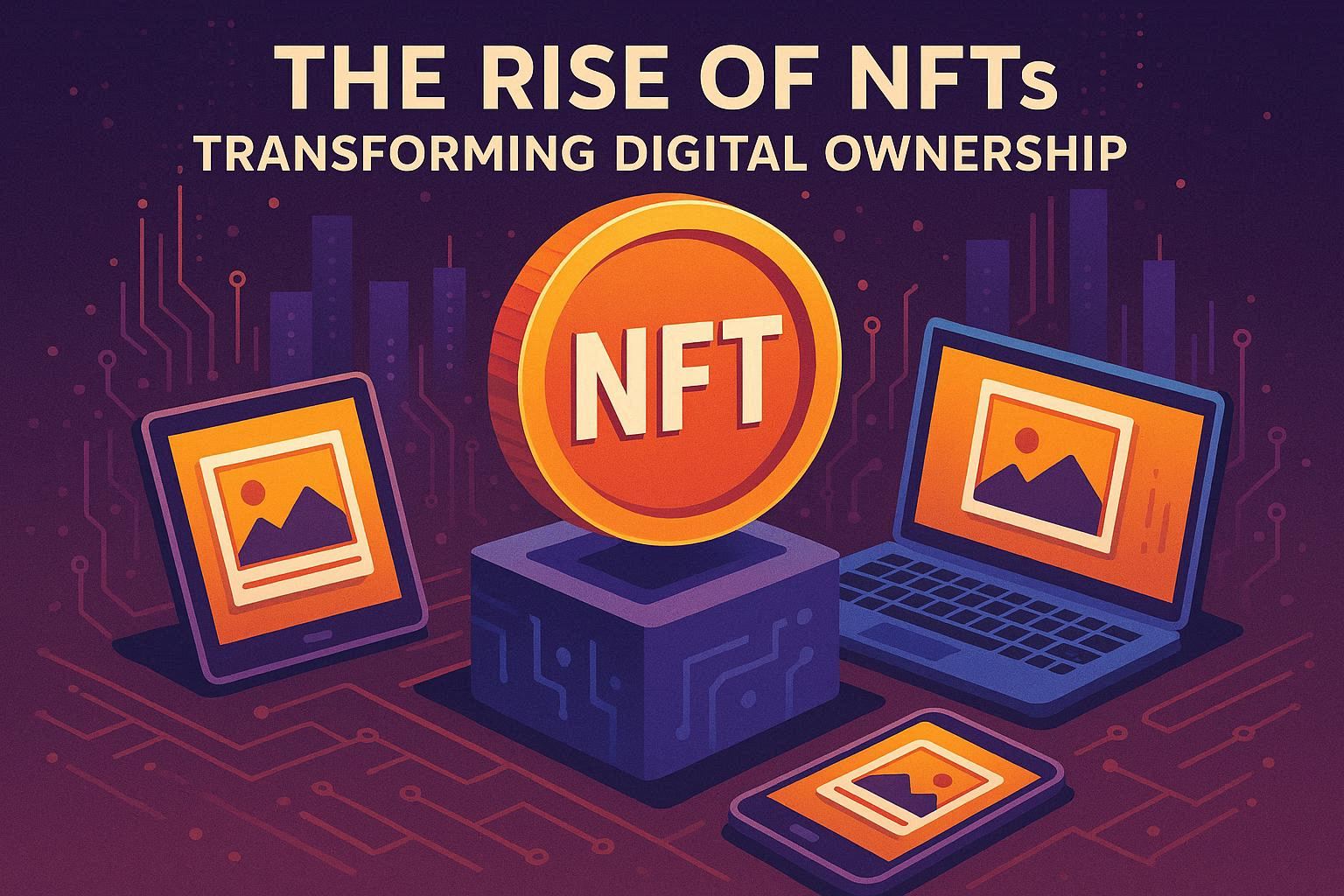
Non-fungible tokens (NFTs) have emerged as one of the most transformative trends in blockchain technology. Unlike cryptocurrencies, which are interchangeable, NFTs represent unique digital assets verified on the blockchain. This innovation has revolutionized digital ownership, enabling artists, gamers, and creators to monetize their work in unprecedented ways.
This article explores the rise of NFTs, their applications, benefits, challenges, and the future of digital asset ownership.
Understanding NFTs
NFTs are digital tokens that represent unique items such as art, music, collectibles, or virtual real estate. Each NFT has distinct metadata and ownership records stored on a blockchain, providing authenticity, scarcity, and traceability. Unlike fungible assets like Bitcoin, NFTs are one-of-a-kind, making them valuable to collectors and investors.
Applications of NFTs
NFTs are reshaping multiple industries:
- Art and Collectibles: Artists can sell digital art directly to collectors, receive royalties from secondary sales, and retain intellectual property rights.
- Gaming: In-game items, skins, and characters can be tokenized as NFTs, allowing players to trade, sell, or use them across multiple platforms.
- Music and Entertainment: Musicians and content creators sell unique tracks, videos, and experiences as NFTs, creating new revenue streams.
- Virtual Real Estate: Digital worlds and metaverses allow users to buy, sell, or lease virtual land and assets as NFTs.
- Identity and Credentials: NFTs can represent unique identities, certifications, or achievements in digital ecosystems.
Benefits of NFTs
NFTs offer several advantages for creators, investors, and users:
- Proven Ownership: Blockchain verification ensures that ownership is secure, transparent, and tamper-proof.
- Monetization: Artists and creators can generate income through primary sales and royalties from future transactions.
- Global Accessibility: NFTs can be bought, sold, and traded globally without intermediaries.
- Programmable Assets: Smart contracts allow NFTs to include automated rules, royalties, or access rights.
- Community Engagement: NFT projects often build strong communities of collectors and fans, increasing loyalty and value.
Challenges and Risks
Despite their popularity, NFTs face challenges:
- Environmental Concerns: Proof-of-Work blockchains consume significant energy, raising sustainability issues.
- Market Volatility: NFT prices can fluctuate dramatically, creating speculative risk.
- Fraud and Scams: Fake NFTs, plagiarized content, and phishing attacks threaten buyers and creators.
- Regulatory Uncertainty: Legal frameworks around NFTs are still evolving in most countries.
- Intellectual Property Rights: NFT ownership doesn’t always guarantee copyright or licensing rights.
Successful NFT Projects
Several NFT projects have demonstrated the transformative potential of this technology:
- CryptoPunks: One of the first NFT collections, consisting of 10,000 unique digital avatars on Ethereum.
- Bored Ape Yacht Club: Offers digital art and membership perks, creating a strong community and brand value.
- Axie Infinity: A blockchain-based game where players own, trade, and battle NFT creatures for rewards.
- NBA Top Shot: Allows fans to collect officially licensed basketball highlights as NFTs.
- Decentraland: Virtual world where land and assets are owned as NFTs, enabling commerce and social interaction.
The Future of NFTs
As NFT adoption grows, several trends are emerging:
- Integration with the Metaverse: NFTs will become key components of virtual worlds, representing avatars, clothing, property, and experiences.
- Fractional Ownership: NFTs can be divided into smaller units, allowing more people to invest in high-value digital assets.
- Enhanced Interoperability: NFT standards and protocols will allow assets to move across multiple blockchains.
- Real-World Asset Tokenization: NFTs could represent physical assets like real estate, cars, or rare collectibles.
- AI-Generated NFTs: Artificial intelligence will create unique, personalized digital assets for collectors and creators.
Conclusion
NFTs are transforming digital ownership, enabling creators to monetize their work, enhancing transparency, and connecting communities worldwide. While challenges such as environmental concerns, market volatility, and regulatory uncertainty remain, the potential of NFTs is immense. As technology evolves, NFTs will likely expand into gaming, art, entertainment, virtual real estate, and beyond, creating a decentralized ecosystem where digital assets have real value and authenticity is guaranteed by blockchain technology.