
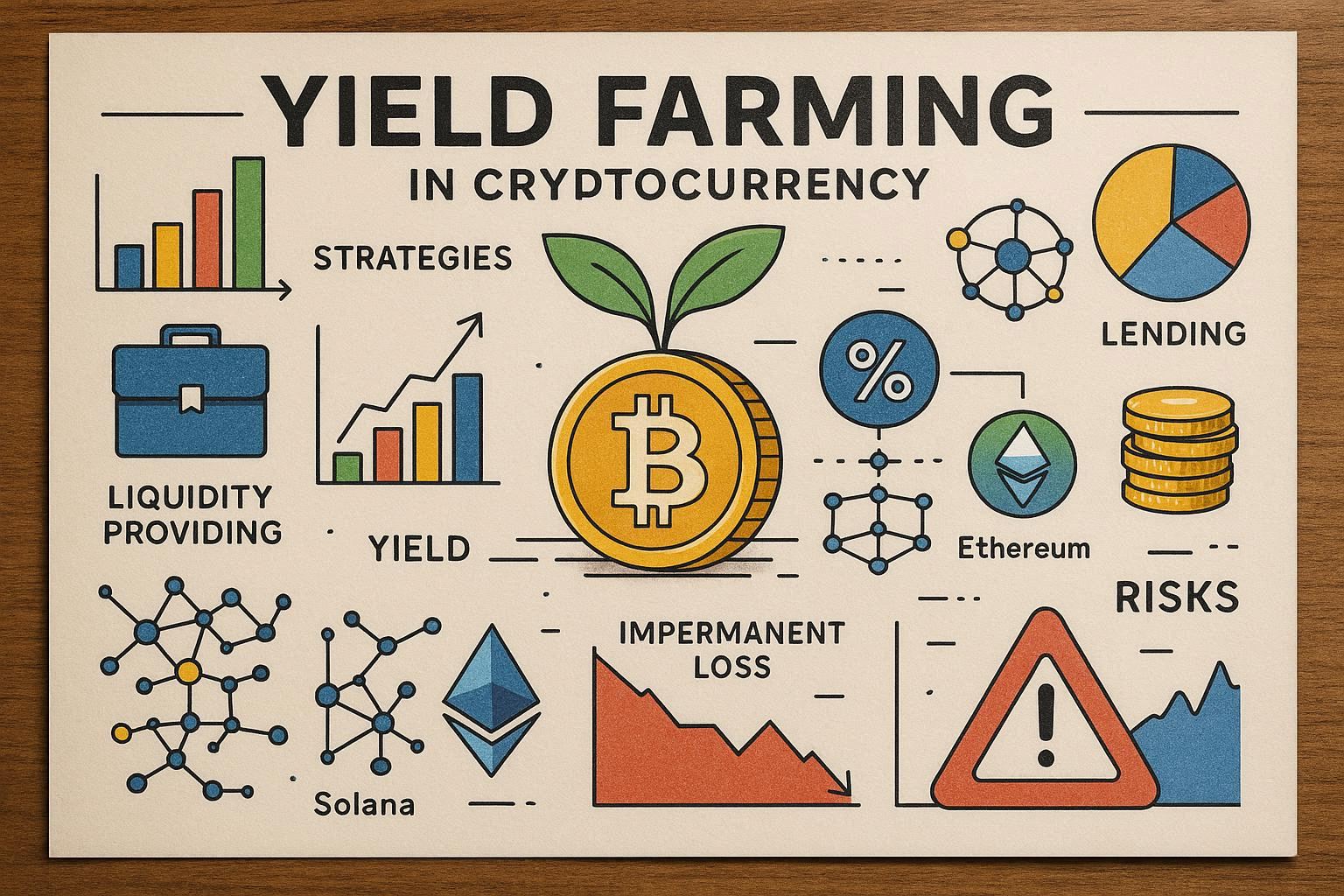
Yield farming, also known as liquidity mining, has become one of the most popular strategies in decentralized finance (DeFi). It allows crypto holders to earn rewards by providing liquidity to DeFi protocols. By leveraging blockchain-based smart contracts, users can generate passive income while supporting decentralized ecosystems.
This article explores how yield farming works, different strategies to maximize returns, the risks involved, and the best practices for participating in this growing DeFi trend.
Understanding Yield Farming
Yield farming involves depositing or lending crypto assets into DeFi protocols to earn rewards, typically in the form of interest, transaction fees, or additional tokens. The goal is to optimize returns by strategically allocating assets across different liquidity pools and platforms.
Yield farming often relies on automated market maker (AMM) protocols, where liquidity providers supply tokens to facilitate trades. In return, they earn a share of the trading fees and, sometimes, governance or incentive tokens.
How Yield Farming Works
The process of yield farming generally follows these steps:
- Select a DeFi Platform: Choose a protocol like Uniswap, SushiSwap, Aave, or Compound based on liquidity, rewards, and security audits.
- Deposit Assets: Provide crypto assets to liquidity pools or lending platforms.
- Earn Rewards: Receive rewards in the form of additional tokens, interest payments, or fees generated by the platform.
- Compound Earnings: Many yield farmers reinvest rewards into new pools to maximize returns over time.
- Withdraw Funds: Funds and earned rewards can be withdrawn at any time, subject to smart contract rules.
Yield Farming Strategies
There are various strategies to maximize yield farming profits:
- Single-Asset Staking: Staking a single token in a protocol to earn rewards. This is simpler and less risky than multi-asset strategies.
- Liquidity Pool Participation: Depositing a pair of tokens into an AMM pool to earn trading fees and rewards. Common pairs include ETH/USDC or DAI/USDT.
- Token Compounding: Reinvesting earned tokens into additional liquidity pools or staking opportunities to benefit from compounding returns.
- Incentivized Farming: Targeting pools that offer bonus rewards in governance or native tokens to maximize APY (annual percentage yield).
- Cross-Platform Yield Optimization: Using yield aggregators like Yearn Finance to automatically shift funds to the highest-yielding pools.
Risks Associated with Yield Farming
While yield farming offers high returns, it also carries several risks:
- Impermanent Loss: When token prices in a liquidity pool diverge, liquidity providers may experience temporary losses relative to holding assets separately.
- Smart Contract Vulnerabilities: Bugs or exploits in the protocol’s code can lead to theft or loss of funds.
- High Volatility: Crypto assets are inherently volatile, which can significantly impact returns.
- Regulatory Uncertainty: DeFi protocols operate in a legal gray area, and future regulations may affect operations or rewards.
- Liquidity Risk: Withdrawing assets from illiquid pools may be difficult or costly during market downturns.
Yield Farming Platforms to Explore
Several DeFi platforms offer robust yield farming opportunities:
- Uniswap: A decentralized exchange that rewards liquidity providers with trading fees and UNI tokens.
- SushiSwap: Expands on Uniswap’s AMM model with additional yield farming incentives and governance participation.
- Aave: Allows lending and borrowing of assets, earning interest as a yield farming strategy.
- Compound: Provides automated interest accrual on deposits, a simple approach to yield farming.
- Yearn Finance: Aggregates multiple yield opportunities and automatically optimizes returns.
Best Practices for Yield Farmers
To maximize returns while minimizing risks, consider these best practices:
- Research Platforms: Ensure the protocol is audited and has a strong community and reputation.
- Diversify Assets: Spread investments across multiple pools and platforms to reduce exposure.
- Monitor Performance: Regularly check APY, pool health, and token price changes.
- Understand Fees: Consider transaction fees, slippage, and withdrawal penalties when allocating funds.
- Use Aggregators: Yield aggregators can save time and optimize returns across multiple DeFi protocols.
Future Trends in Yield Farming
Yield farming continues to evolve with new innovations and opportunities:
- Cross-Chain Yield Farming: Utilizing multiple blockchains to access higher liquidity and rewards.
- Algorithmic Yield Optimization: AI-powered strategies to maximize returns while minimizing risks.
- Synthetic Assets: Earning yield by participating in tokenized derivatives markets.
- Institutional Adoption: Growing interest from hedge funds and investment firms could stabilize and expand yields.
- Regulatory Clarity: Future regulations may improve trust and security for retail and institutional farmers alike.
Conclusion
Yield farming is one of the most dynamic aspects of decentralized finance, offering significant earning potential while reshaping the way users interact with crypto assets. By understanding the mechanisms, strategies, and risks, investors can make informed decisions and leverage DeFi opportunities responsibly.
As the DeFi ecosystem continues to innovate, yield farming will remain a core component, enabling individuals to generate passive income, support liquidity, and participate in the future of decentralized finance.