
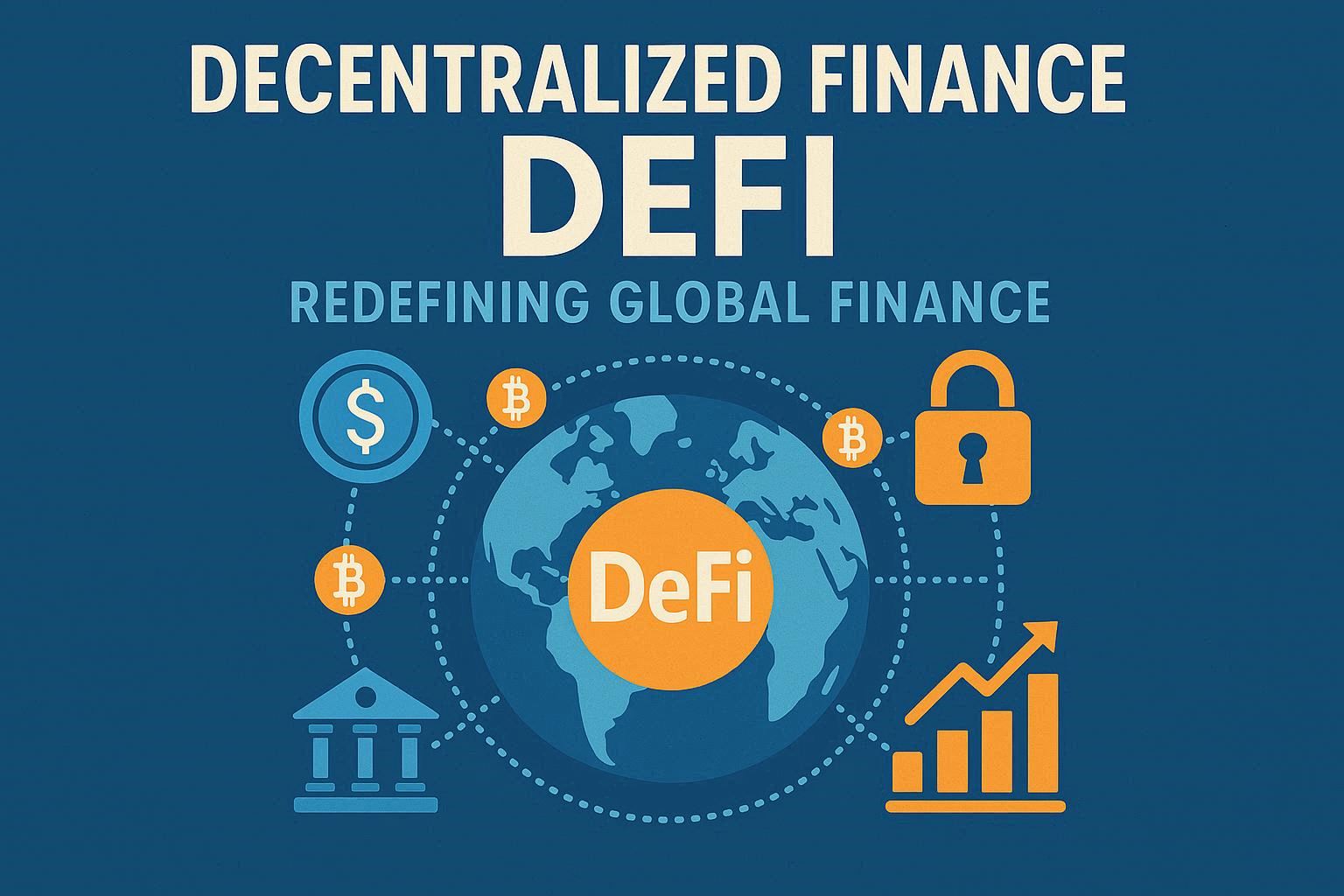
Decentralized Finance, commonly known as DeFi, has emerged as one of the most disruptive innovations in the cryptocurrency space. By leveraging blockchain technology and smart contracts, DeFi platforms offer financial services without the need for traditional banks, intermediaries, or centralized authorities.
This article explores the mechanisms behind DeFi, the benefits and opportunities it provides to individuals and institutions, the risks involved, and how this evolving ecosystem may shape the future of global finance.
Understanding DeFi
DeFi refers to financial applications built on blockchain networks, primarily Ethereum, that replicate and innovate upon traditional financial services such as lending, borrowing, trading, and insurance. Unlike centralized finance, DeFi operates without intermediaries, enabling direct peer-to-peer interactions with programmable protocols governed by smart contracts.
Key features of DeFi include transparency, accessibility, interoperability, and composability, meaning different DeFi applications can integrate seamlessly to create more complex financial products.
Core Components of DeFi
DeFi encompasses several major categories:
- Decentralized Exchanges (DEXs): Platforms like Uniswap and SushiSwap allow users to trade cryptocurrencies directly from their wallets without relying on centralized exchanges.
- Lending and Borrowing: Protocols such as Aave and Compound enable users to lend their assets to earn interest or borrow assets using collateral, all executed via smart contracts.
- Stablecoins: Essential for reducing volatility, stablecoins like USDC or DAI are widely used within DeFi for trading, lending, and liquidity provision.
- Yield Farming and Liquidity Mining: Users can earn rewards by providing liquidity to pools or participating in staking programs, often receiving governance tokens in return.
- Insurance Protocols: DeFi insurance platforms such as Nexus Mutual protect against smart contract failures, hacks, or other risks.
Benefits of DeFi
DeFi offers multiple advantages that challenge traditional financial systems:
- Financial Inclusion: Anyone with an internet connection and crypto wallet can access DeFi services, bypassing banking barriers.
- Transparency: Blockchain ensures all transactions are publicly verifiable, reducing fraud and increasing trust.
- Programmability: Smart contracts automate financial agreements, payments, and lending processes without human intervention.
- Higher Yields: DeFi can offer higher interest rates compared to traditional banks due to the removal of intermediaries.
- Interoperability: Users can combine multiple protocols, such as lending on Compound and using rewards to farm on another platform, maximizing returns.
Risks and Challenges
While DeFi has immense potential, participants must navigate significant risks:
- Smart Contract Vulnerabilities: Bugs or exploits in contracts can result in loss of funds.
- Impermanent Loss: Liquidity providers can experience temporary losses when token prices fluctuate.
- Regulatory Uncertainty: DeFi operates in a legal gray area, exposing users and developers to potential regulatory action.
- Market Volatility: Rapid price movements in cryptocurrencies can amplify risks for traders and investors.
- Complexity: Novice users may struggle to understand protocols, increasing the risk of mistakes or mismanagement of assets.
DeFi Innovations and Trends
DeFi continues to evolve, with emerging trends enhancing its utility and adoption:
- Layer 2 Scaling Solutions: Reduce transaction costs and increase efficiency on Ethereum, making DeFi more accessible.
- Cross-Chain Integration: Protocols are enabling assets and liquidity to move between blockchains seamlessly.
- Decentralized Governance: Community-driven decision-making allows token holders to vote on upgrades, fees, and policies.
- Algorithmic Stablecoins: Innovations in decentralized stablecoins reduce dependence on centralized fiat reserves.
- Institutional Participation: Growing interest from hedge funds, venture capital, and traditional finance is bringing liquidity and legitimacy to DeFi.
Case Studies of Successful DeFi Protocols
Several DeFi protocols have demonstrated strong adoption and innovative solutions:
- Uniswap: A decentralized exchange that pioneered automated market making (AMM), enabling efficient token trading without order books.
- Aave: A lending protocol offering variable and stable interest rates, flash loans, and advanced risk management tools.
- Compound: Allows users to lend or borrow crypto with automated interest rate adjustments based on supply and demand.
- Yearn Finance: Optimizes yield farming across multiple DeFi platforms, reducing complexity for users while maximizing returns.
- Nexus Mutual: Provides decentralized insurance coverage for smart contract failures and crypto risks.
Strategies for DeFi Participation
Investors can adopt strategic approaches to safely navigate DeFi:
- Diversify assets across multiple platforms to mitigate single-protocol risk.
- Use reputable platforms with audited smart contracts to reduce vulnerabilities.
- Monitor yields, token prices, and protocol updates regularly.
- Start with stablecoin pools to reduce exposure to volatility.
- Leverage community governance opportunities to influence protocol decisions and earn rewards.
The Future of DeFi
DeFi is expected to continue its rapid growth, potentially reshaping global financial systems. Integration with traditional finance, regulatory clarity, and improved user interfaces will increase adoption. Decentralized lending, cross-chain liquidity, and programmable financial products will make financial services more efficient, inclusive, and secure worldwide.
Conclusion
Decentralized Finance is revolutionizing the way people access, invest, and interact with money. By removing intermediaries, enhancing transparency, and providing innovative financial products, DeFi empowers individuals and institutions alike. While risks remain, careful strategy, due diligence, and technological advancements will likely position DeFi as a cornerstone of the future financial ecosystem. For investors, developers, and crypto enthusiasts, understanding DeFi is essential for navigating the evolving landscape of blockchain-based finance.