
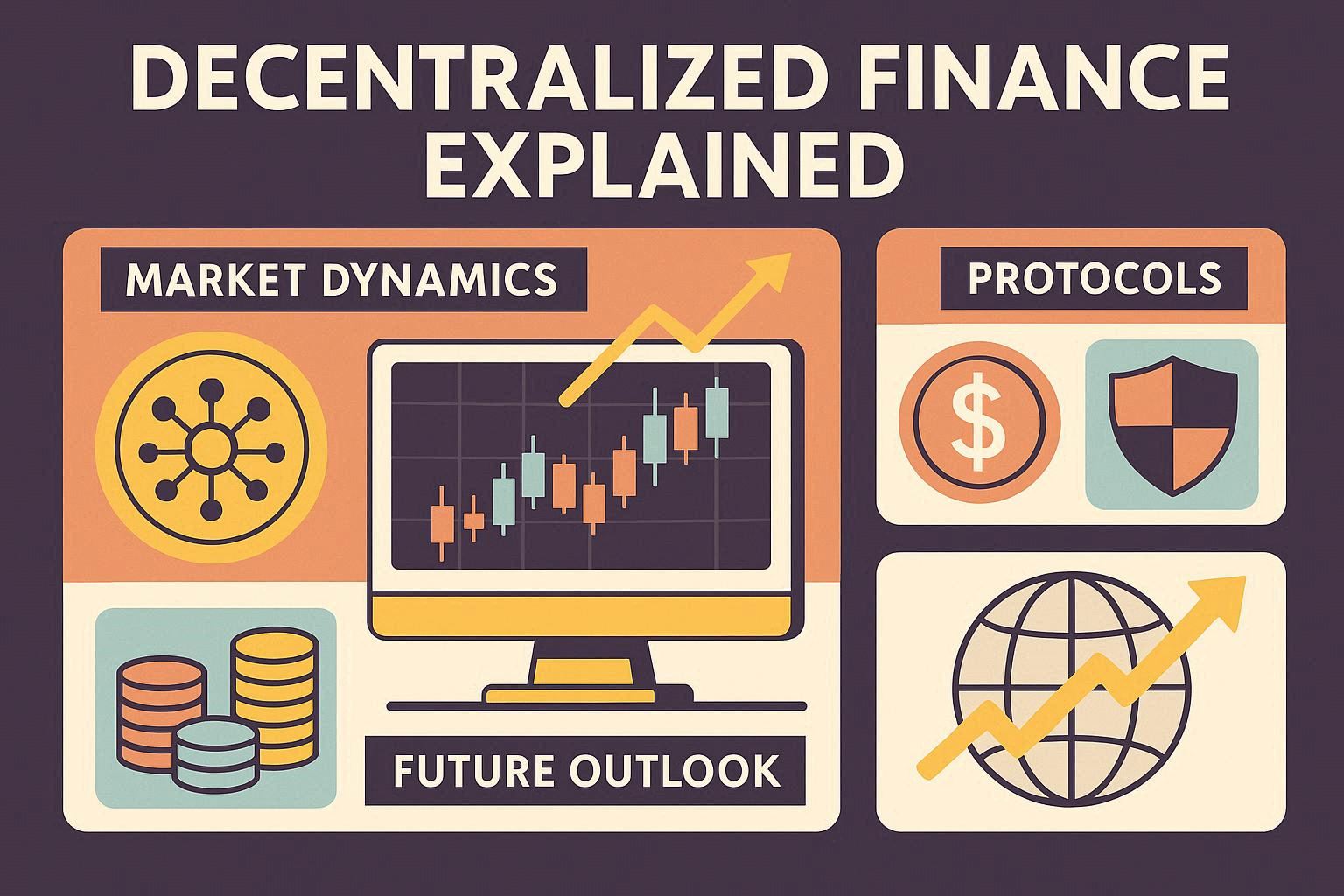
Decentralized Finance (DeFi) is transforming the global financial landscape by offering peer-to-peer financial services that operate without traditional intermediaries. Leveraging blockchain technology and smart contracts, DeFi platforms provide lending, borrowing, trading, and yield generation directly on decentralized networks. The sector has experienced explosive growth over the past few years, attracting individual investors, institutions, and developers worldwide.
DeFi Market Overview
The DeFi ecosystem encompasses a broad range of protocols and platforms. Leading projects such as Uniswap, Aave, Compound, MakerDAO, and Curve Finance have pioneered decentralized trading, lending, and liquidity provision. The total value locked (TVL) in DeFi protocols has reached billions of dollars, highlighting the growing adoption and confidence in decentralized financial systems.
DeFi enables global accessibility, allowing users to participate in financial activities with minimal barriers. Unlike traditional finance, which often requires intermediaries, credit checks, and extensive paperwork, DeFi allows anyone with an internet connection and a crypto wallet to engage in lending, borrowing, and trading.
Key DeFi Protocols and Services
- Decentralized Exchanges (DEXs): Platforms such as Uniswap and Sushiswap allow users to trade tokens directly from their wallets without intermediaries.
- Lending and Borrowing Platforms: Aave, Compound, and MakerDAO facilitate peer-to-peer lending and borrowing with transparent interest rates.
- Stablecoins: Tokens like USDC, DAI, and USDT provide price stability and serve as the backbone of DeFi transactions.
- Yield Farming and Liquidity Mining: Users provide liquidity to protocols and earn rewards in the form of tokens or interest.
- Staking and Governance: Many DeFi platforms allow users to stake tokens and participate in decentralized governance decisions.
Trends Driving DeFi Growth
Several trends are accelerating DeFi adoption:
- Cross-Chain Compatibility: Multi-chain protocols enable seamless asset transfers and interoperability between different blockchain networks.
- Integration with NFTs: NFTs are being used as collateral, unlocking new financial applications within DeFi.
- DeFi Insurance: Platforms offer coverage for smart contract failures and other risks, increasing user confidence.
- Institutional Interest: Hedge funds and investment firms are exploring DeFi products for yield generation and portfolio diversification.
- Layer-2 Scaling Solutions: Technologies such as Optimism and Arbitrum reduce transaction costs and improve efficiency on major networks like Ethereum.
Risks and Considerations in DeFi
Despite its opportunities, DeFi carries risks that participants must consider:
- Smart Contract Vulnerabilities: Bugs or exploits can result in loss of funds.
- Impermanent Loss: Liquidity providers may experience temporary losses when providing assets to volatile trading pairs.
- Regulatory Uncertainty: Governments are still defining frameworks for DeFi operations, which could impact protocol compliance and user rights.
- Market Volatility: Token prices fluctuate widely, affecting yields and collateral values.
Investment and Strategic Insights
Successful participation in DeFi requires understanding protocol mechanics, risk management, and market dynamics. Investors analyze TVL, tokenomics, protocol security, and governance structures before committing funds. Diversification across multiple protocols and assets is recommended to mitigate potential losses. Monitoring project updates, audits, and community sentiment provides further insights for informed decision-making.
Technological Innovations in DeFi
DeFi continues to innovate with technologies that enhance scalability, security, and user experience. Layer-2 networks reduce congestion and transaction fees, while decentralized oracles provide accurate real-world data to smart contracts. Cross-chain bridges enable interoperability, connecting different blockchain ecosystems for broader liquidity and utility. Additionally, composability—where multiple DeFi protocols can interact seamlessly—creates complex, integrated financial products previously impossible in traditional finance.
Future Outlook
The future of DeFi is promising, with several potential developments:
- Expansion into traditional finance by bridging decentralized and centralized systems.
- Increased adoption of synthetic assets and tokenized real-world assets.
- Growth in decentralized insurance solutions to mitigate risks.
- Enhanced security measures, audits, and protocol insurance to protect users.
- Broader adoption by retail users and institutional investors as interfaces become more user-friendly.
Conclusion
Decentralized Finance is redefining how financial services are accessed, operated, and monetized. By removing intermediaries, DeFi empowers users with full control of their assets, transparent protocols, and innovative opportunities for yield generation. Staying informed about market dynamics, protocol developments, technological innovations, and regulatory considerations is essential for safely participating in the DeFi ecosystem. As the sector matures, DeFi is expected to continue reshaping global finance, offering inclusive, efficient, and decentralized financial solutions for a diverse range of participants worldwide.