
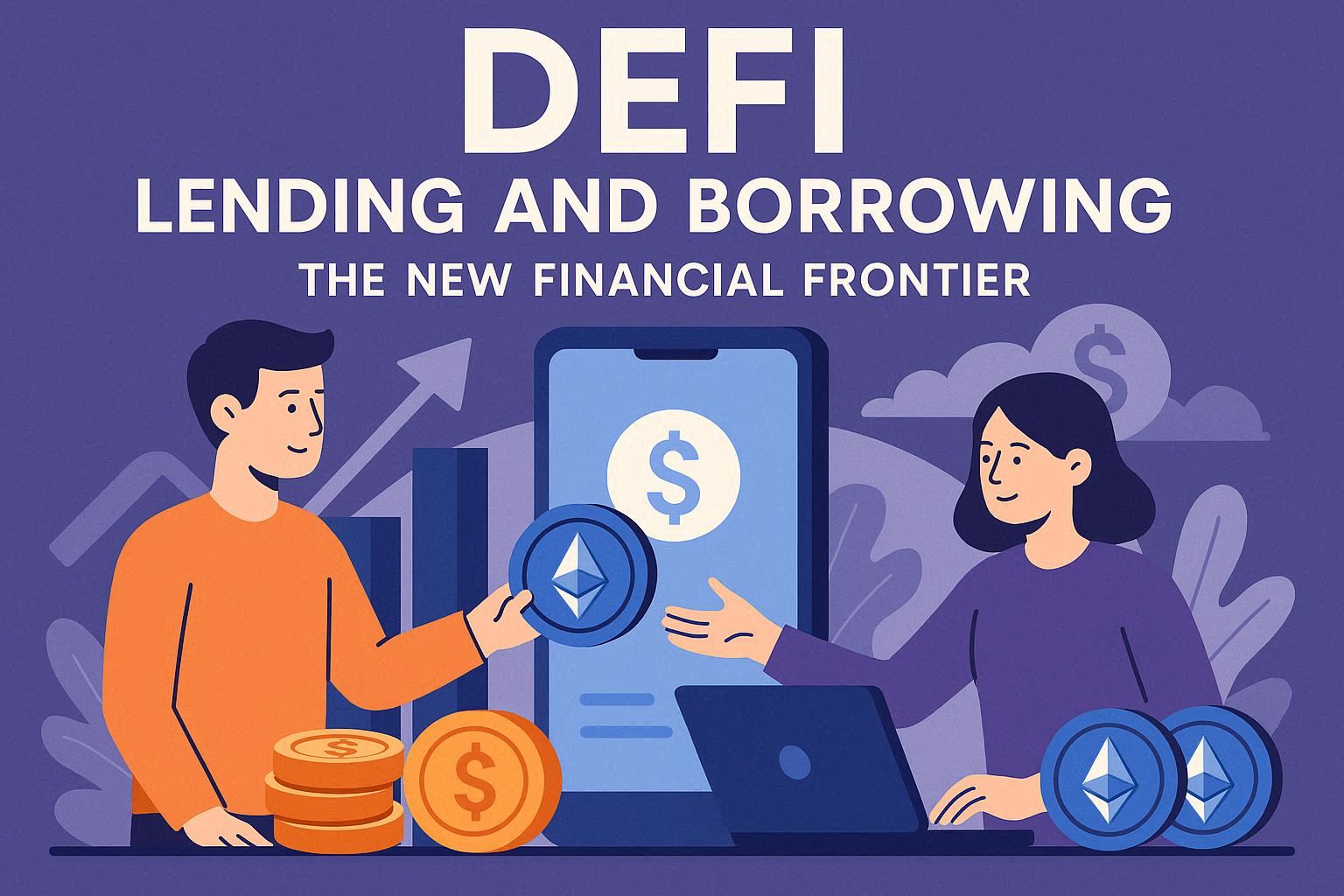
Decentralized finance (DeFi) has opened up a new frontier in financial services by enabling peer-to-peer lending and borrowing without the need for traditional banks. Users can lend crypto assets to earn interest or borrow assets by providing collateral, all managed through smart contracts on blockchain networks.
This article explores how DeFi lending and borrowing works, the benefits and risks, major platforms, and best practices for participating in this rapidly growing ecosystem.
Understanding DeFi Lending and Borrowing
DeFi lending and borrowing relies on smart contracts to automate financial transactions. Borrowers deposit collateral in a protocol, which allows them to borrow assets up to a specific percentage of their collateral value. Lenders deposit assets to liquidity pools and earn interest based on supply and demand.
The process eliminates intermediaries, providing faster, more accessible, and transparent financial services. Unlike traditional banking, users retain control of their funds while participating in these decentralized markets.
How DeFi Lending Works
Lenders supply their crypto assets to a protocol’s liquidity pool. These funds are then made available to borrowers who pay interest for the borrowed assets. Lenders earn a portion of the interest as rewards, often in both the borrowed asset and the platform’s native tokens.
Popular lending platforms include:
- Aave: Offers multiple assets for lending and borrowing, featuring variable and stable interest rates, flash loans, and collateral swaps.
- Compound: An algorithmic money market that automatically adjusts interest rates based on supply and demand.
- MakerDAO: Allows users to generate DAI stablecoins by depositing cryptocurrency as collateral.
- Venus: A lending protocol on Binance Smart Chain offering interest-earning opportunities with diverse collateral options.
How DeFi Borrowing Works
Borrowers deposit collateral (often overcollateralized) to secure a loan. The loan-to-value (LTV) ratio determines the maximum borrowable amount. Borrowers can access funds without selling their assets, preserving exposure to potential appreciation.
DeFi borrowing provides flexibility for various use cases:
- Leveraged Trading: Borrowing assets to increase exposure to price movements.
- Liquidity Management: Accessing funds for other DeFi strategies or investments.
- Stablecoin Access: Generating stablecoins against volatile crypto holdings for everyday transactions.
- Yield Farming: Borrowed assets can be deployed in other DeFi protocols to earn additional yield.
Benefits of DeFi Lending and Borrowing
- Global Accessibility: Anyone with a crypto wallet can participate without geographic restrictions.
- Higher Yields: Lending rates in DeFi often exceed traditional savings accounts or fixed-income investments.
- 24/7 Operations: Protocols run continuously without bank hours or delays.
- Transparency: All transactions are recorded on the blockchain, allowing real-time monitoring and auditability.
- Collateral Efficiency: Users can leverage existing holdings without selling assets to access liquidity.
Risks in DeFi Lending and Borrowing
Despite its advantages, DeFi lending carries risks that users must consider:
- Smart Contract Vulnerabilities: Exploits or bugs can lead to loss of funds.
- Collateral Volatility: Rapid changes in crypto prices may trigger liquidation of collateral.
- Liquidity Risk: Low liquidity in a protocol can make borrowing or withdrawing assets difficult.
- Regulatory Uncertainty: Evolving regulations could affect platform operations or user access.
- Interest Rate Fluctuations: Variable interest rates may reduce profitability or increase borrowing costs unexpectedly.
Major DeFi Lending and Borrowing Platforms
Several platforms have become leaders in the DeFi lending space:
- Aave: Known for flash loans and collateral swaps, offering flexible borrowing solutions.
- Compound: Algorithmic protocol adjusting rates dynamically, popular for its simplicity and efficiency.
- MakerDAO: Creator of DAI stablecoin, providing overcollateralized loans and robust risk management systems.
- Venus: BSC-based protocol with fast transactions, diverse assets, and competitive yields.
- Alchemix: Offers self-repaying loans by automatically using yield generated from collateral to repay debts.
Best Practices for DeFi Lending and Borrowing
- Research Protocols: Ensure the platform is audited and has a reliable track record.
- Diversify: Spread assets across multiple protocols to reduce exposure to a single smart contract.
- Monitor Collateral: Keep track of asset prices to avoid liquidation risks.
- Understand Fees: Evaluate platform fees, gas costs, and liquidation penalties before lending or borrowing.
- Use Risk Management Tools: Platforms often provide tools to automate liquidation alerts or collateral adjustments.
The Future of DeFi Lending and Borrowing
DeFi lending and borrowing is expected to grow with innovations and broader adoption. Key trends include:
- Institutional Participation: Hedge funds and asset managers entering DeFi markets may increase liquidity and stability.
- Cross-Chain Lending: Bridging assets across multiple blockchains to unlock new opportunities.
- Algorithmic Risk Management: AI-driven tools to optimize collateral ratios and interest rates.
- Integration with Traditional Finance: Hybrid models connecting DeFi protocols with banks and payment systems.
- Improved User Experience: Simplified interfaces and education will attract mainstream users.
Conclusion
DeFi lending and borrowing is redefining how financial services operate, offering transparency, accessibility, and high-yield opportunities beyond traditional banking. By understanding the mechanisms, platforms, benefits, and risks, users can navigate this new financial frontier responsibly.
As DeFi continues to evolve, lending and borrowing protocols will play a central role in driving adoption, innovation, and global financial inclusion.