
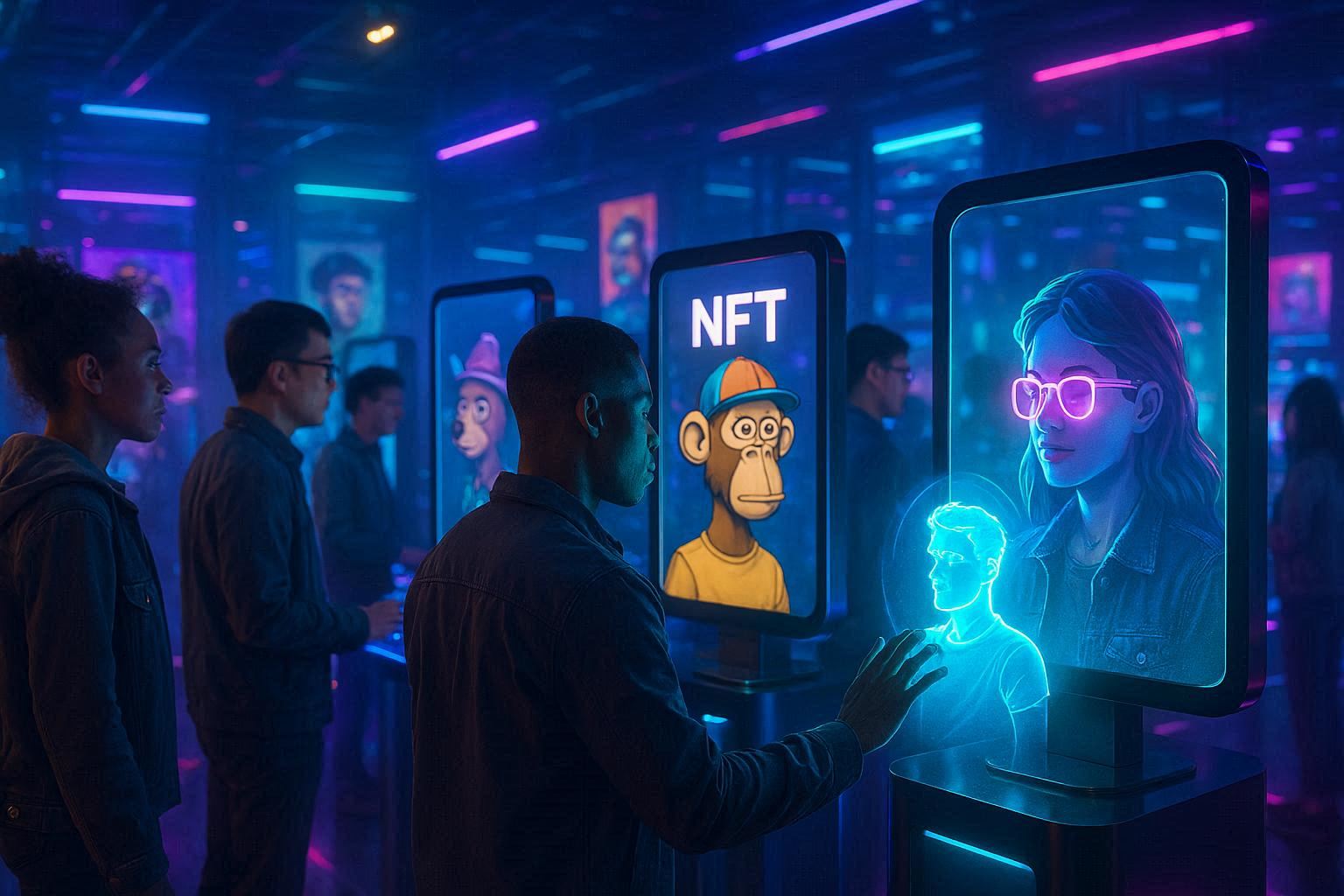
In the Web3 era, identity is no longer just about government-issued documents or social media profiles. The next frontier of identity management is digital — secure, verifiable, and powered by blockchain technology. Non-Fungible Tokens (NFTs) are emerging as a revolutionary way to represent identity, reputation, and ownership online.
This article explores how NFTs are transforming digital identity, the challenges involved, and what the future holds for decentralized authentication systems.
Understanding Digital Identity
Traditional identity systems rely on centralized authorities — banks, governments, or corporations — to verify who we are. This creates inefficiencies, risks of data breaches, and limited user control. Digital identity built on blockchain flips that model: individuals own and manage their own data through cryptographic proofs and decentralized wallets.
How NFTs Represent Identity
NFTs can encode unique attributes, achievements, or credentials tied to a user. For example, an NFT might represent a diploma, professional certification, or even an online reputation score. These tokens are verifiable on-chain, tamper-proof, and portable across Web3 applications.
Applications of NFT-Based Identities
- Education: Universities issue degrees as NFTs, easily verifiable by employers worldwide.
- Professional Credentials: Blockchain-based résumés prove authenticity of work experience and skills.
- Healthcare: Patients can securely manage medical records and consent permissions through NFT identity wallets.
- Gaming and Metaverse: Avatars and user reputations become persistent across multiple virtual worlds.
- Social Networks: Users maintain control of their identity and content without corporate intermediaries.
Benefits of NFT Identities
- Elimination of centralized identity theft risks.
- Ownership and control of personal data.
- Interoperability across digital ecosystems.
- Permanent, verifiable credentials for life.
- Transparent reputation systems for Web3 interactions.
Challenges and Ethical Considerations
- Privacy: On-chain data must balance transparency with confidentiality.
- Regulation: Governments need to define standards for digital identity compliance.
- Accessibility: Global adoption requires user-friendly tools and education.
- Security: Wallet theft or key loss can result in permanent loss of identity tokens.
The Path Forward
Projects like Soulbound Tokens (SBTs) by Vitalik Buterin, and platforms such as Civic and Polygon ID, are pioneering NFT-based identity frameworks. These innovations aim to create decentralized societies (DeSoc) where trust, identity, and credentials are securely verified through NFTs without compromising privacy.
Conclusion
NFTs are evolving beyond art and collectibles into foundational tools for Web3 identity. As blockchain ecosystems mature, NFT-based identities could become as universal as passports or email addresses — empowering individuals to own, protect, and prove who they are in the digital world.