
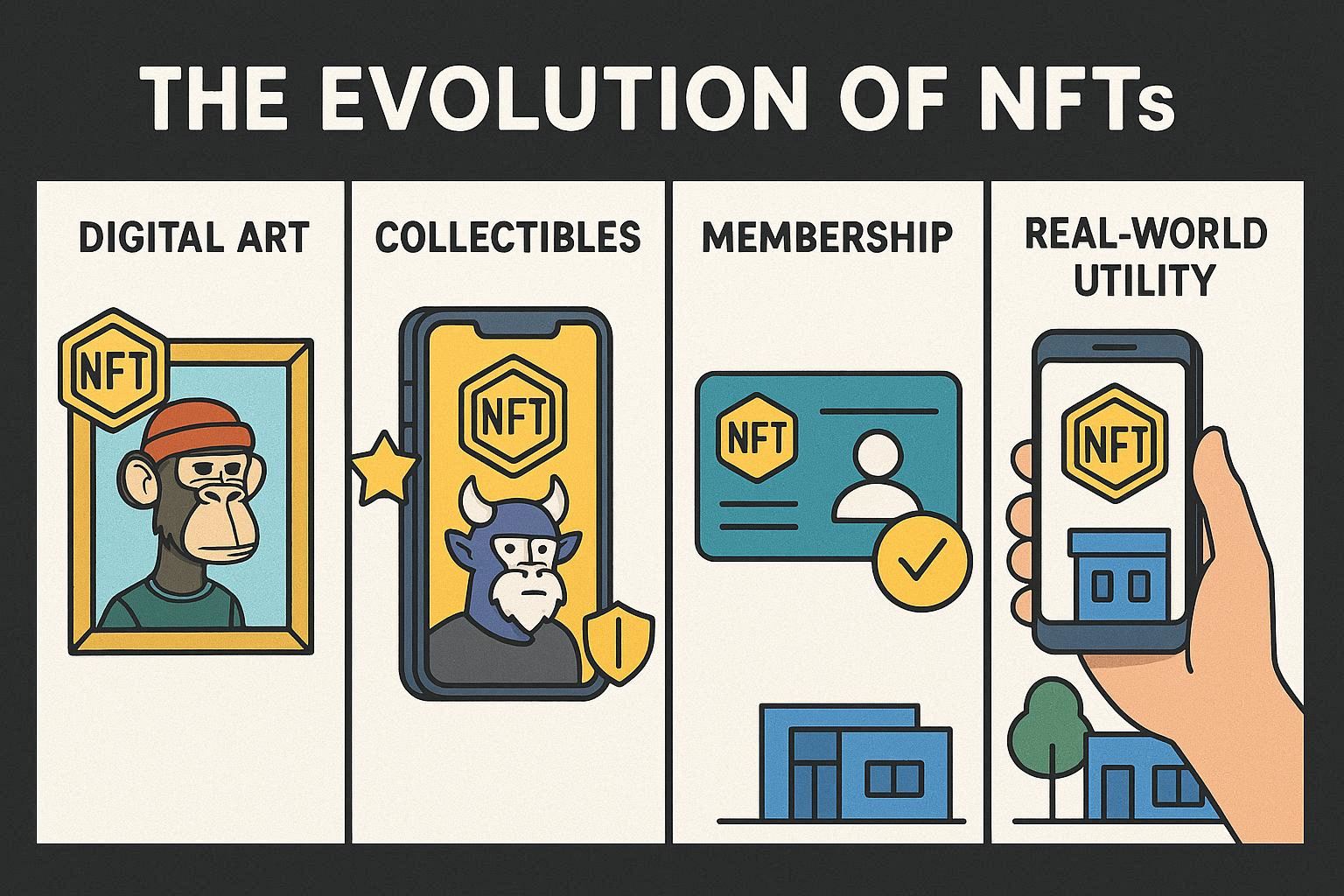
Non-Fungible Tokens (NFTs) have moved beyond being a niche trend for digital art collectors. They now represent a cornerstone of digital ownership, reshaping how creators, brands, and investors interact with the digital economy. The NFT space has evolved rapidly, expanding into sectors like gaming, real estate, fashion, and identity verification.
This article explores how NFTs are growing beyond collectibles and becoming integral to real-world industries through innovation, technology, and mass adoption.
Understanding NFTs
NFTs are unique digital assets recorded on a blockchain, proving ownership and authenticity of an item or piece of content. Unlike cryptocurrencies such as Bitcoin or Ethereum, NFTs are not interchangeable — each represents something distinct.
The most common standard for NFTs is ERC-721, used on the Ethereum network. However, other blockchains like Polygon, Solana, and Flow have also developed their own ecosystems for NFT creation and exchange.
The First Wave: Digital Art and Collectibles
The NFT boom began with digital art and collectibles. Projects like CryptoPunks and Bored Ape Yacht Club became status symbols in the digital world, selling for millions of dollars. Artists gained new ways to monetize their work directly, without relying on intermediaries.
This early phase demonstrated the power of blockchain in protecting intellectual property and rewarding creators through royalties — even on secondary sales.
Beyond Art: NFTs in Gaming and the Metaverse
The next major step for NFTs came from gaming and virtual worlds. In blockchain games like Axie Infinity and Sandbox, NFTs represent in-game assets, characters, or land parcels that players can buy, sell, or trade freely.
In the metaverse, NFTs have become digital property deeds. Users can own virtual land, build experiences, and even host events, creating new business models in entertainment and commerce.
Real-World Applications of NFTs
- Real Estate: Property titles and ownership documents are being tokenized as NFTs, simplifying transactions and reducing fraud.
- Music Industry: Musicians release albums or exclusive access passes as NFTs, giving fans verifiable ownership of limited content.
- Luxury and Fashion: Brands use NFTs to verify product authenticity and connect physical goods with digital twins.
- Identity and Access: NFTs are being tested for digital IDs, memberships, and secure access to events or communities.
Environmental and Regulatory Challenges
As the NFT market expands, concerns about energy consumption and regulation persist. New blockchain solutions like Proof-of-Stake (PoS) and carbon-neutral NFT platforms aim to reduce environmental impact. Governments are also starting to draft legal frameworks to protect consumers and creators in digital economies.
The Future of NFTs
In the next decade, NFTs will merge with artificial intelligence (AI) and the Internet of Things (IoT). Smart NFTs could adapt or evolve based on data, offering personalized experiences and dynamic value. Enterprises are exploring NFTs for supply chain verification, customer engagement, and digital identity systems.
Interoperability between metaverse platforms and blockchain networks will further enhance the accessibility and utility of NFTs, creating a unified digital ownership ecosystem.
Conclusion
The NFT revolution is far from over — it’s only just beginning. From digital art to real-world applications, NFTs are redefining how value, identity, and ownership exist in the digital age. As innovation continues, NFTs will play a central role in Web3, connecting the virtual and physical worlds through trust, transparency, and creativity.